

When a Bunion Requires Orthopaedic Care

Dr Seng Chusheng
Orthopaedic Surgery, Sports & Exercise Medicine
MBBS (Singapore), MRCS (Edinburgh), MMed (Orth), FRCS (Edinburgh)
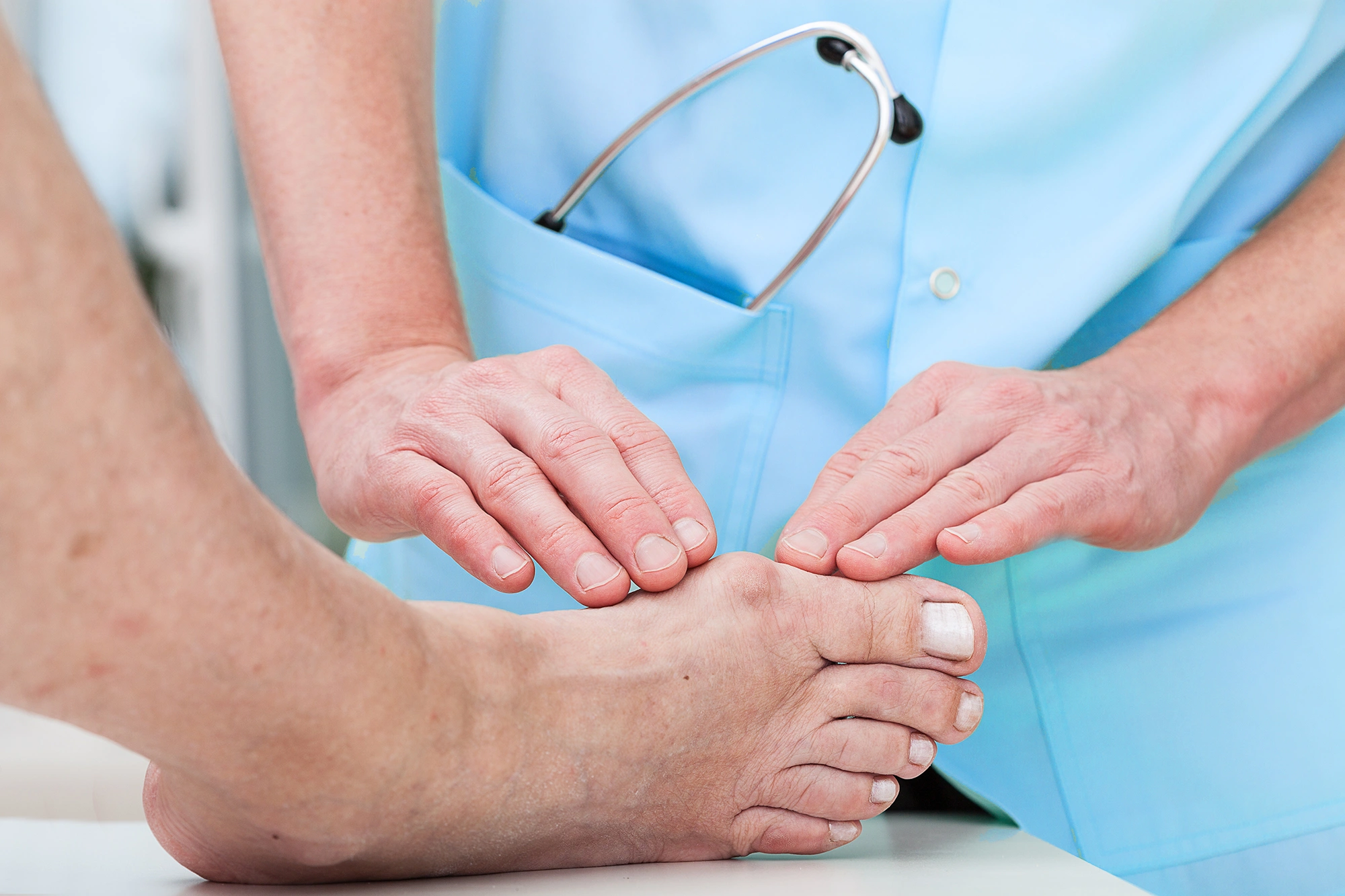
They say good shoes can take you places. Bad shoes, however, may give you bunions. A bunion is a common and potentially painful condition which presents itself as a deformed bump on the joint at the base of your big toe. It is a deformity that causes the big toe to point towards the second toe or even overlap with it.
While wearing shoes that are too tight can increase the likelihood of getting bunions (among those who are already at risk), it is also a condition that runs in some families where people inherit a foot shape or structure with flat feet, low arches or a metatarsal head that is too round. Unfortunately, bunions do not go away on their own and can progressively get worse if left untreated.
When Should You Seek an Orthopaedic Specialist for Bunions?
While a visible lump at the base of the big toe is the most recognisable sign of a bunion, the need to see an orthopaedic specialist usually depends on how much it affects your daily life.
You should consider seeking orthopaedic attention if you experience:
- Persistent pain in the big toe or forefoot that does not improve with rest, footwear changes or over-the-counter pain relief
- Redness, swelling or tenderness around the big toe joint that worsens over time
- Calluses, corns or thickened skin that repeatedly form due to abnormal pressure or friction
- Stiffness or restricted movement in the big toe that interferes with walking or balance
- Difficulty wearing regular shoes comfortably because of pain or deformity
Early consultation with an orthopaedic specialist can help prevent progression of the deformity, identify contributing factors such as foot mechanics, and explore non-surgical treatment options. If conservative measures no longer relieve symptoms, a specialist can also advise whether further intervention is appropriate.
How Is a Bunion Diagnosed?
Bunions are diagnosed through a comprehensive assessment that combines both the physical appearance of the foot and the presentation of symptoms. During the examination, besides looking for physical signs such as swelling or redness, you may also be asked about the level of pain you’re experiencing, how symptoms affect your daily activities, personal footwear preferences, family history and any underlying conditions such as arthritis. Then, to better assess the severity of the bunion, X-rays are often ordered. These images would eventually guide the specialist in forming a personalised treatment plan.
What Are the Bunion Treatment Options in Singapore?
Treatment plans for bunions typically start with non-surgical approaches that aim to ease discomfort and support proper foot mechanics. The appropriate treatment approach depends on several factors, including the severity of the bunion, level of pain, lifestyle needs and overall foot health. Early evaluation and individualised care can help manage symptoms effectively and prevent further complications.
Non-surgical Bunion Treatment
Non-surgical treatment focuses on symptom relief and improving comfort during daily activities. Patients may be advised to wear properly fitted footwear with a wide toe box and adequate support to reduce pressure on the affected joint. Protective padding may be used to minimise friction and irritation, while custom-made or over-the-counter orthotic devices can help support foot mechanics and redistribute weight more evenly across the foot.
Anti-inflammatory medications may be prescribed when appropriate to help reduce pain and swelling. In some cases, physiotherapy or guided exercises may be recommended to maintain joint mobility, improve strength and support walking mechanics. While these measures do not correct the bunion deformity, they can help in managing symptoms.
Surgical Bunion Treatment
Surgical treatment may be considered when non-surgical measures no longer provide sufficient relief or when pain significantly affects mobility and quality of life. Bunion surgery addresses the underlying bone and joint misalignment at the base of the big toe, with the aim of reducing pain, correcting the deformity and improving foot function.
There are several surgical techniques available, and the choice of procedure depends on factors such as the severity of the bunion, joint condition and individual patient needs. A thorough evaluation by a foot and ankle specialist is essential to determine whether surgery is appropriate and to develop a personalised treatment plan that supports long-term foot health and mobility.

Complications That Can Arise From an Untreated Bunion
If left untreated, a bunion can worsen over time and place abnormal pressure on other parts of the foot. This may lead to additional conditions that cause ongoing pain and affect mobility, including:
- Bursitis: Inflammation of the fluid-filled sac near the big toe joint, which can result in swelling and tenderness
- Hammertoe: Abnormal bending of the smaller toes due to altered foot mechanics and muscle imbalance
- Metatarsalgia: Pain and inflammation in the ball of the foot caused by uneven weight distribution
Early assessment and appropriate management can help reduce symptoms and lower the risk of these complications developing.
Taking the Next Step in Bunion Care
Bunions do not affect everyone in the same way, and symptoms can change as daily demands on the feet increase. Orthopaedic care provides clarity on what is driving the condition and offers tailored options to manage symptoms before they begin to limit movement or trigger further complications. With timely guidance, treatment can be adapted to support comfort, mobility and long-term foot health.
At Axis Orthopaedic Centre, care is centred on a personalised, evidence-based approach that considers both symptoms and long-term foot function. Patients are assessed by Dr Seng Chusheng, an orthopaedic surgeon with experience in foot and ankle conditions, who tailors treatment plans to individual needs and lifestyle demands. If bunion symptoms are affecting your comfort or mobility, book an early consultation with us to explore appropriate treatment options tailored to your needs.
About Dr Seng Chusheng
Dr Seng Chusheng is a consultant orthopaedic surgeon at Axis Orthopaedic Centre, specialising in foot and ankle surgery and knee surgery. He obtained his MBBS and Master of Medicine in Orthopaedic Surgery from the National University of Singapore and is a Fellow of the Royal College of Surgeons of Edinburgh.
Dr Seng trained at the Assal Centre in Geneva, Switzerland, focusing on complex foot and ankle deformities, trauma and minimally invasive techniques. Before entering private practice, he served as a consultant orthopaedic surgeon at Singapore General Hospital and continues as a visiting consultant there. His dedication to patient care earned him the SingHealth Service With A Heart Award.
An active contributor to orthopaedic research, Dr Seng has published in peer-reviewed journals and was awarded the Japanese Orthopaedic Association Travelling Fellowship.

Singapore 329563
View Us On Google Map

For foreign patients, tele-consult on zoom or WhatsApp can be done if pre-arranged in advance. Please email or WhatsApp first to enquire.

